
Home Blog

Jensen Huang News: What the US Reports and Nvidia Board Probe Mean

0

If you’ve been searching for the latest Jensen Huang news, you’ve probably hit a wall of conflicting headlines. Some are confirmed, some are allegations, and some are plain speculation. Jensen Huang is the CEO who built Nvidia into the world’s most valuable AI chip company, and over the past few weeks he has become the center of a story involving US media leaks, a board investigation, and questions in Washington. This post sticks to what has been reported and what hasn’t been proven.

Jensen Huang News: How the Story Began

It started with leaks. Reports in US media said American intelligence officials suspected that Alice Huang has been feeding information about Huang and the chipmaker’s plans to the Chinese government. Alice Huang is a former executive at Megaspeed, a Singapore-based Nvidia customer, and she is not related to Jensen. 

Then came the personal side. In a message to employees on November 8, Huang acknowledged that he had been unfaithful to his wife and apologized to his family, colleagues and shareholders.

Here is the part that gets lost online. The relationship is admitted. The espionage claim is not. One outlet put it plainly: the claims surrounding Alice Huang and her alleged intelligence links have not been independently established. China has dismissed the reports as a smear. 

What the Latest US Reports Actually Said

Several separate stories landed within days of each other, which is why the whole thing feels bigger than any single report.

The first was the New York Times account. According to a summary of that reporting, US intelligence identified Alice Huang as a Chinese spy, Trump was briefed roughly a year earlier but took no action, and Jensen Huang received no defensive briefing. If accurate, that raises a question beyond Huang’s own judgment: why a CEO this central to US technology wasn’t warned. 

The second was a Bloomberg report claiming Nvidia intervened in a US government probe of suspected chip smuggling by Megaspeed. Megaspeed has denied smuggling chips. Nvidia has described Megaspeed as a typical regional cloud customer, and Huang has said the company counted all the GPUs at the firm. 

That second thread matters more for the business than the personal story. A private matter fades. A question about whether a company influenced a federal investigation does not.

Nvidia Board Investigation and Company Response

Nvidia moved fast. The board said it had launched an independent investigation, overseen by a committee of independent directors assisted by outside counsel. The company also said it had no reason to believe US national security or Nvidia’s proprietary information had been compromised. 

Nvidia previously described Huang’s contact with Alice Huang as “not unusual or unexpected,” noting that meeting customers is part of a CEO’s job. That’s a fair point, since chip executives meet customers constantly. The harder question is where a business relationship ends and a personal one begins, and whether anyone at the company was watching that line. 

A company spokesperson said Huang is committed to leading Nvidia without interruption. Whether the board agrees will depend on what the investigation finds.

Trump, the FBI and Washington’s Reaction

President Trump said the FBI is looking into the matter, but he also defended Huang, saying he views him as a very high quality person he has known a long time. 

Not everyone in Washington is relaxed. Senator Chris Coons said Congress will investigate and get answers. One report points to a closed-door congressional briefing with Huang on November 18, and ABC has reported that House Republicans are weighing a subpoena. Secretary of State Marco Rubio declined to comment and called it a company matter. 

Shareholder Lawsuit and Stock Reaction

Investors reacted in two ways: they sold, and they sued. A shareholder lawsuit now accuses Huang and Nvidia of misleading investors over the alleged spy affair, on behalf of those who bought Nvidia securities between October 9, 2025 and November 8, 2026. It’s worth repeating that the case remains an allegation, not a finding of wrongdoing. 

The share price slipped, and Huang dropped behind Warren Buffett and Larry Ellison on the world’s richest list. Rankings like that are a shallow measure, but they show how much of Nvidia’s value rests on one person’s credibility.

Why This Jensen Huang News Matters Beyond One Man

Key-person risk is real. Nvidia is so central to AI that one analysis asked whether the industry is too dependent on the company, and the executive who has spent three decades building it. 

Export controls are in focus. Nvidia has spent years navigating restrictions on selling advanced chips to China. Any suggestion that a customer was smuggling chips, or that the company leaned on regulators, puts that whole system under a microscope.

Other countries are watching. Indian commentators noted that the episode renewed questions about the global AI industry’s heavy dependence on a small number of chip suppliers. 

What Could Happen Next

Foreign media have sketched out a range of outcomes. In the best case, the board concludes that Huang became a target of intelligence agencies but did not actively leak any secrets or cause material harm. He stays, and governance gets tighter. In the worst case, the issue spills into the company’s wider compliance, and Huang may choose to step down voluntarily for the best interest of the company. 

My own read is that the truth probably sits somewhere in the middle, but that’s a guess, not a fact. Here’s what to watch in the coming weeks:

  • The findings of the board’s independent investigation
  • Whatever comes out of the November 18 congressional briefing
  • Any official statement from the FBI or the Commerce Department
  • The progress of the shareholder lawsuit

Final Thoughts on the Latest Jensen Huang News

Strip away the headlines and you have one confirmed fact, several serious allegations, and a lot of unanswered questions. Supporters point to three decades of building something extraordinary. Critics argue that someone running critical US technology needs to be above this kind of risk. Both views can be held at once.

The responsible move for readers is patience. Allegations reported in the press are not verdicts, and investigations take time. We’ll keep following the Jensen Huang news as the board and US authorities release more information.


JIO IPO Explained: Price, Subscription, Listing Day and What Comes Next

0

The JIO IPO is now done and dusted. Jio Platforms listed on the NSE and BSE today, October 28, 2026, after raising about ₹30,213 crore in the biggest public issue India has seen. Shares jumped roughly 21.5% on debut. If you applied, skipped it, or are simply wondering whether to buy Jio shares now, this guide covers everything in one place: dates, price, subscription numbers, financials, where the money goes, and what to watch next.

JIO IPO at a Glance

DetailInformation
CompanyJio Platforms Limited (digital and telecom arm of Reliance Industries)
IPO openedOctober 21, 2026
IPO closedOctober 23, 2026
AllotmentOctober 26, 2026
Listing dateOctober 28, 2026 on NSE and BSE
Price band₹1,065 to ₹1,119 per share
Lot size12 shares (minimum ₹13,428 at the upper band)
Issue sizeUp to ₹30,213 crore (about $3.2 billion)
Issue type100% fresh issue of 27 crore shares, no offer for sale
Face value₹10 per share
Employee discount₹54 per share
Implied valuationAbout ₹10.3 lakh crore (roughly $108 billion) at the upper band
RegistrarKFin Technologies

How the JIO IPO Came Together

Jio’s listing has been talked about for years. Mukesh Ambani said back in 2019 that Jio and Reliance Retail would move towards listings within five years. Reuters reported in 2025 that the plan slipped beyond that year, and the real process only started in 2026.

Key Timeline

DateMilestone
June 19, 2026DRHP filed with SEBI, NSE and BSE
August 28, 2026SEBI issued its observation letter, clearing the draft
September to October 2026Global investor roadshows
Mid-October 2026Price band of ₹1,065 to ₹1,119 announced
October 19, 2026Anchor book opened
October 21 to 23, 2026Public subscription
October 26, 2026Allotment
October 28, 2026Listing on NSE and BSE

The issue was run by 17 book-running lead managers, including Kotak Mahindra Capital, Morgan Stanley, JPMorgan, Goldman Sachs, ICICI Securities and SBI Capital Markets.

JIO IPO Subscription: How Strong Was the Demand?

Demand was heavy from the first morning. The issue was fully covered within roughly 95 to 100 minutes of opening on day one, and by the close it was subscribed 22.19 times overall.

Investor categoryFinal subscription
Qualified Institutional Buyers (QIB)70.55x
Non-Institutional Investors (NII)14.00x
Retail individual investors2.72x
Eligible Reliance shareholders7.60x
Employees2.93x
Overall22.19x

Reports put total bids at over ₹7.4 lakh crore, with more than one crore applications. Global funds such as BlackRock, Capital Group and GIC took part in the anchor book.

What the Numbers Tell Us

Institutions did the heavy lifting. Retail demand of 2.72x is healthy but modest next to the QIB number, which is typical for a very large issue where the retail portion is small compared with the institutional book.

Jio Stock Market Price: Listing Day Performance

The question everyone is searching is the jio stock market price, so here is what we know. The issue price was ₹1,119 at the upper band. Jio shares rose about 21.5% on their trading debut, which works out to roughly ₹1,360 per share (our calculation from the reported gain). That lined up closely with grey market expectations: GMP had been around ₹243 to ₹258 in the days before listing, pointing to a 21 to 23% gain.

Price pointLevel
Lower band₹1,065
Issue price (upper band)₹1,119
Listing day gainAbout 21.5% (roughly ₹1,360)
Nomura target price₹1,340 (Buy rating)

Nomura initiated at Buy with a target of ₹1,340, which is about 19.7% above the issue price. Its argument is that Jio’s heavy capital spending phase is mostly behind it, so free cash flow should improve sharply.

Note: the price moves every second during market hours. For the live jio stock market price, check the quote on the NSE or BSE website or your broker app.

Jio NSE Listing: How to Find and Track the Stock

Searching for jio nse is the quickest way to land on the exchange page. Here is how to follow the stock:

  1. Open the NSE website or your broker app.
  2. Search for “Jio Platforms”.
  3. Confirm the company name and the equity series before placing any order.
  4. Add it to your watchlist to track price, volume and circuit limits.

The shares trade on both NSE and BSE, so you can buy through either exchange from any broker with a demat account. If you do not have a demat account yet, opening one is the first step.

Jio Share Market Standing: Where Jio Lands Among India’s Biggest Companies

At the upper band valuation of about ₹10.3 lakh crore, Jio was expected to become the fourth Indian company past the ₹10 lakh crore mark, ahead of ICICI Bank at issue price. For the wider Jio share market story, two things stand out:

  • A clean read on Jio’s value. Until now, investors could only price Jio indirectly through Reliance Industries. A separate listing gives the market a direct reference point for the telecom and digital business.
  • A record for India. At about ₹30,213 crore, it is the largest IPO in the country, ahead of Hyundai Motor India’s roughly $3.3 billion listing in 2024.

Jio Platforms Financials (FY26)

MetricFY26
Revenue from operations₹1,46,885 crore (up 14.6%)
EBITDA₹76,255 crore
EBITDA margin51.9%
Profit after taxAbout ₹30,050 crore (up about 15%)
Subscribers (Reliance Jio Infocomm)524.4 million
Net subscriber additions36.2 million
5G users268 million
ARPU (exit quarter)₹214 (vs ₹206.2 in FY25)
Monthly churn1.67%
Total borrowings (Mar 31, 2026)₹70,781 crore
Net debt₹27,579 crore
Net leverage0.36x (down from 0.71x)

This was also the first year Jio crossed ₹30,000 crore in annual profit. Revenue grew from ₹1,09,558 crore in FY24 to ₹1,28,218 crore in FY25, so growth has been steady rather than lumpy.

Where Will the JIO IPO Money Go?

This is the part many investors overlook. The issue is entirely fresh shares, so every rupee goes to the company, not to selling shareholders.

Use of proceedsAmount
Prepay borrowings of Reliance Jio Infocomm (RJIL)Up to ₹27,500 crore (about 91% of gross proceeds at the upper band)
General corporate purposesBalance, capped at 25% of gross proceeds

Paying down debt should cut interest costs and strengthen the balance sheet. One analyst estimate puts the annual interest saving at ₹2,000 to ₹2,500 crore. The flip side: most of the money does not fund a new growth engine. Buying the stock means buying the whole business, not the debt repayment.

Risks to Weigh Before Buying Jio Shares

  • Valuation. A roughly ₹10.3 lakh crore price tag already bakes in a lot of optimism. Listing gains do not guarantee further upside.
  • Telecom concentration. Close to 80% of revenue has historically come from the telecom business.
  • Competition. Airtel remains a strong rival, and satellite internet players such as Starlink add a new variable.
  • Return on capital. RoCE was 10.76% in FY26, which is not high for a business of this scale.
  • Tax disputes. The offer documents flag subsidiary tax proceedings of ₹10,811 crore.
  • ARPU dependence. Future growth leans on raising average revenue per user and getting more value out of the existing customer base.
  • Debut-day volatility. Large listings can swing sharply in the first few sessions.

How to Check Your JIO IPO Allotment Status

If you applied, allotment was due on October 26 and refunds and share credits on October 27. You can verify through:

  1. The registrar, KFin Technologies, using your PAN or application number.
  2. The NSE or BSE IPO allotment page (select Equity, then Jio Platforms).
  3. Your demat account, where allotted shares should already show.

Frequently Asked Questions About the JIO IPO

When did the JIO IPO list on NSE?

Jio Platforms listed on the NSE and BSE on October 28, 2026.

What was the JIO IPO price?

The price band was ₹1,065 to ₹1,119 per share, and the issue was priced at the upper end, ₹1,119.

How much was the JIO IPO subscribed?

22.19 times overall, with QIBs at 70.55x, NIIs at 14x and retail investors at 2.72x.

Was there an offer for sale in the Jio IPO?

No. It was a 100% fresh issue of 27 crore shares, and Reliance Industries did not sell shares.

What is the minimum investment in the Jio IPO?

One lot of 12 shares, which was ₹13,428 at the upper price band.

What is the current Jio stock market price?

The stock debuted about 21.5% above the ₹1,119 issue price. Because the price changes constantly, check the NSE or BSE live quote for the latest figure.

Should I buy Jio shares after listing?

That depends on your goals, risk appetite and time horizon. This article is for information only, not financial advice. Read the final offer document, compare Jio’s valuation with peers such as Bharti Airtel, and consider speaking to a SEBI-registered advisor.

Final Thoughts

The JIO IPO delivered on almost every headline measure: record size, record-breaking speed of subscription, strong institutional demand and a double-digit debut. What happens from here depends on execution, mainly ARPU growth, free cash flow after the capex cycle, and how quickly debt comes down. Keep an eye on the jio stock market price on NSE over the coming sessions and on the next quarterly results.

Disclaimer: This post is for informational purposes only and is not investment advice. Stock market investments are subject to market risks. Figures are based on company filings and media reports available on October 28, 2026.

Tesla Flying Car: Everything We Know About the Roadster That Flies

0

For years, “Tesla flying car” was a running joke in car circles. Then, in October 2026, it stopped being one. Elon Musk unveiled a “flying” car equipped with thrusters during a livestreamed event at a SpaceX facility. The vehicle is the next-generation Roadster, and it comes with big promises, big deposits, and some very big open questions. Here is what’s confirmed, what isn’t, and what it means for anyone hoping to buy one.

What Is the Tesla Flying Car?

The Tesla flying car is the redesigned Roadster, a two-seat electric supercar that uses thrusters developed with SpaceX to launch itself briefly into the air. The reveal came at a SpaceX test site in McGregor, Texas. NBC Newsfoxbusiness

It’s not a flying car in the sci-fi sense. Think of it as a very fast electric car with rocket-style boosters that can lift it for short bursts. During the demo, the Roadster launched over a lineup of cars and a semi-truck, performing a midair flip before landing safely. foxbusiness

Musk was candid about the risk. He said the car’s success is not guaranteed, but it will probably work. He also admitted it isn’t necessarily a safety-optimized car. CBS NewsNBC News

How Does the Tesla Flying Car Work?

Two systems do the heavy lifting.

Cold-gas thrusters. Musk said the car carries ultra high-pressure air tanks to propel it into the air. The setup includes altitude control thrusters plus main thrusters at the rear. Tesla claims the thruster system produces four to five times the force that tires can generate. That is why the car’s acceleration numbers look so extreme. With Tesla Roadster debut, Elon Musk shows “flying cars are real” – CBS News +2

Fan suction system. Tesla’s vehicle engineering chief, Lars Moravy, explained that an underside fan system can pull up to 2 Gs, which lets the car drive upside down. The demo showed this off when the car drove up a towering curved ramp, went inverted, and launched off the end. euronewseuronews

The performance claims are wild: 0 to 60 mph in under a second and a top speed above 230 mph for certain versions. Treat them as manufacturer targets until independent testing confirms them. foxbusiness

Tesla Flying Car Versions and Price

Tesla lists three trims, and only one of them flies:

  • Performance: The “road-ready” base car has the suction system but no thrusters. NBC News
  • Thrust: A two-seater that adds rear-mounted cold-gas thrusters for sub-one-second acceleration to 60 mph.
  • Rocket: An invitation-only single-seater with 10 thrusters arranged around the car that can briefly take flight. Fortune

On price, there is no final number yet. Tesla is asking for a $50,000 reservation payment for Performance and $250,000 for Thrust, while Rocket has no publicly disclosed reservation fee. Reports differ on how those payments are structured, so check Tesla’s terms before paying anything. One outlet notes $5,000 is due upfront on the Performance reservation, with the remaining $45,000 due within 10 days. Fortunetech-insider

The specs have also shifted since the original 2017 pitch. Tesla has cut the promised range to over 300 miles from the 620 miles originally advertised, and the car now seats no more than two. supercarblondie

Is the Tesla Flying Car Legal?

This is the biggest unanswered question. Tesla’s own site says the planned flying model is not approved for public road use. CBS News

Regulators have started weighing in:

  • The FAA said the vehicle doesn’t meet the agency’s definition of an aircraft, though it did put temporary flight restrictions over the McGregor test site for the demo. flyingroadsterflyingroadster
  • NHTSA stressed that vehicle standards and local traffic laws still apply. kingy

So the car sits in a gray zone: not an aircraft in the FAA’s eyes, but unproven as a road-legal flyer. Asked whether it would be street legal, Musk’s answer was that it depends on your street. One analysis noted that it is unclear which regulator, if any, would oversee the flying features. flyingroadstertech-insider

Tesla Flying Car Release Date

Musk says production won’t begin until 2028, and no price was revealed. That timeline deserves caution. The Roadster was first announced eight years before this debut, and the project has missed deadline after deadline. Tesla’s own filings long listed it as “in development TBD,” unchanged since 2017. Tesla unveils its next-generation Roadster ‘flying car’ +2

Tesla Flying Car vs. Real Flying Cars

Don’t confuse this with eVTOL aircraft or the startups building true flying cars. Rivals like Alef are working on flying cars of their own. Those projects aim for sustained flight. The Tesla Roadster is closer to a hopping, gliding stunt machine, and an aerospace engineer told NBC the car’s moves come with serious limitations. NBC NewsNBC News

That said, the engineering is real. Cold-gas thrusters are proven technology in spaceflight, and putting them on a road car is a genuine first. It just isn’t a commuter solution.

Is the Tesla Flying Car Just a Publicity Stunt?

Fair question, and opinions are split. Some see a real halo product that shows what Tesla and SpaceX can build together. Tesla itself calls it “the best of the last human-driven cars.” foxbusiness

Skeptics point to the missing price, the heavy deposits, and the lack of a regulatory path. One critic described it as a pre-revenue research project wrapped in a consumer reservation page. Others read it as a signal of corporate direction: Slate’s take is that the stunt points toward a possible Tesla–SpaceX merger. That is commentary, not confirmed news. tech-insiderSlate

The fair middle ground: the demo was real, the production promise is unproven, and the flying version may never be something a normal driver can use on a public road.

Should You Reserve a Tesla Flying Car?

Only if you can afford to tie up the money and wait. You’d be paying tens of thousands of dollars for a car with no final price, no delivery guarantee before 2028, and no confirmed legal path for flight. If you’re curious but cautious, watch for independent testing, a published price, and regulatory clarity before committing.

Frequently Asked Questions

Can the Tesla flying car actually fly?
It can leave the ground briefly using thrusters, as shown in the October 2026 demo. It is not capable of sustained flight like a helicopter or eVTOL aircraft.

When will the Tesla flying car be released?
Tesla targets 2028 for production, but the Roadster has a long history of delays, so treat that date as a target rather than a promise.

How much does the Tesla flying car cost?
No final price has been announced. Reported reservation payments are $50,000 for Performance and $250,000 for Thrust, while the flying Rocket version is invite-only.

Is the Tesla flying car street legal?
The flight-capable Rocket version is not approved for public roads, according to Tesla. Road-legal status for other trims will depend on federal standards and local laws.

Does the Tesla flying car need FAA approval?
The FAA says the vehicle doesn’t meet its definition of an aircraft, so it isn’t regulated as one today. How any flying features would be overseen remains unclear.

Who is building the Tesla flying car’s thrusters?
The flight system was developed through collaboration between Tesla and SpaceX engineers.

Tiger Shroff Escapes Unhurt After Firing on His Car in Mumbai

0

Bollywood actor Tiger Shroff Attack: He is safe after unidentified men opened fire on his car in Mumbai’s Juhu area on Sunday evening.

What happened

The incident took place between 7:00 pm and 7:30 pm near Pushpa Park, under Juhu police station’s jurisdiction. Police say three to four rounds were fired at the car as he was leaving a ground. A large crowd had gathered, and the assailants allegedly fired from within it.

Is Tiger Shroff safe?

Yes. A senior police official said Shroff was not injured. His driver was hurt and has been admitted to Nanavati Hospital. An autorickshaw driver was also reportedly injured.

Gang claim under scrutiny

A social media post purporting to be from the Lawrence Bishnoi gang has claimed responsibility. Police have not verified it. The post alleged that Shroff ignored earlier warnings against working with actor Salman Khan.

These are claims made by the post, not findings by police. Gang-linked posts have been used to claim credit before, so wait for the investigation to confirm anything

What police are doing

Mumbai Police have launched a manhunt, and specialised teams are examining CCTV footage from the area. Police say the investigation is ongoing.

What we still don’t know

  • Who the attackers are and whether the gang’s claim is genuine
  • The full extent of the driver’s injuries
  • Whether security around Shroff will be increased

This story is developing, and details may change as police release more information.

US-Russia Diesel Deal: What It Means for India

0

The US-Russia diesel deal has shaken up global energy markets. For India, the effects will probably show up in refinery margins and export markets first, not at the petrol pump.

What is the US-Russia diesel deal?

President Donald Trump says he has struck a deal to obtain diesel from Russia, reversing years of US policy. He announced it after speaking with Vladimir Putin. Russia is to supply more than 300,000 tons right away, then 500,000 tons in November and 1 million tons soon after.

To make it legal, the US Treasury’s OFAC issued General License 135 on 9 October. It temporarily authorises specified transactions involving Russian-origin diesel until 7 April 2027.

The timing matters. US diesel averaged $6.28 per gallon after a record high in September, and midterm elections are on 3 November.

Why Indian refiners are watching closely

Russia is central to India’s energy mix. Russian crude made up around 30 per cent of India’s oil imports in FY26. India also refines crude into diesel and sells it abroad. It exported 630,000 barrels per day of diesel in September, and Europe took 280,000 of that.

The main risk is to export margins. More Russian diesel on the market could narrow price premiums and compress Indian refiners’ margins. The risk lies in shifting trade flows rather than direct competition in the US. If shipping costs to Europe stay high, Indian refiners may find Asian markets more profitable.

Will petrol and diesel get cheaper in India?

Probably not soon. The initial deal may have only a limited effect, and consumers shouldn’t expect an immediate cut in petrol or diesel prices. It also depends on whether extra supply lowers international prices. It also depends on whether the easing extends beyond diesel to Russian crude. This is not a blanket lifting of sanctions on Russian crude oil.

Can Russia actually deliver?

That is still unclear. Russia has banned diesel exports since July as Ukrainian attacks on its refineries strained domestic supply. The IEA says Russian diesel output has fallen by about 30%. One analyst said the announced volumes don’t move the needle much, since the US uses about 3.7 million barrels of diesel a day.

Some analysts also see a risk for countries like India. They warn that constrained Russian refining capacity and legal hurdles could tighten supply for emerging markets and cause price volatility.

A diplomatic point for New Delhi

The deal gives India a talking point. Rajeev Sharan of Brickwork Ratings said Washington’s decision strengthens India’s argument that energy security and affordability should guide purchasing decisions. That matters because Trump previously imposed tariffs on Indian exports to discourage its Russian crude purchases.

There is a legal wrinkle too. According to The Eastern Strategist, the license does not repeal the US sanctions law. That law has a trigger for top-five importers knowingly making new Russian crude purchases.

What to watch next

  • Actual deliveries. Whether Russia ships the promised volumes.
  • Diesel spreads. This is where Indian refiners earn or lose money.
  • Crude oil policy. Whether the easing ever extends beyond diesel.
  • Political backlash. The deal drew criticism, and Zelensky called it a “gift” to Putin.

Bottom line

The US-Russia diesel deal is unlikely to lower fuel prices in India right away. The impact will show up in refinery margins, diesel export routes and India’s argument on Russian oil. How big it gets depends on whether Russia can deliver.

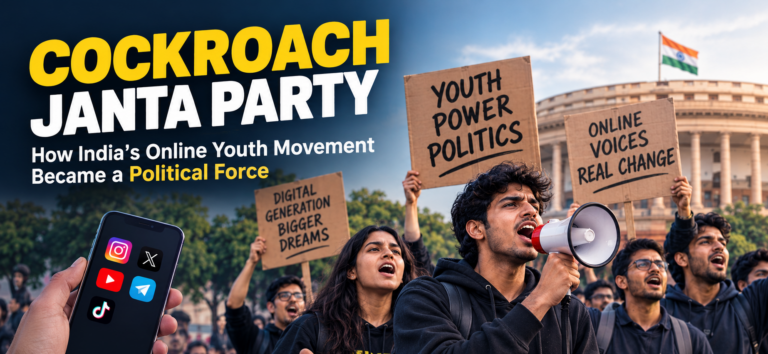
Cockroach Janta Party: How India’s Online Youth Movement Became a Political Force

0

Delhi spent the weekend under heavy security. Police detained more than 2,000 people on Saturday, locked down the city centre and deployed thousands of police and paramilitary personnel as the Cockroach Janta Party (CJP) tried to hold its second mass protest at Jantar Mantar. By Sunday, a court had ordered the release of the movement’s founder, Abhijeet Dipke, and two other senior leaders, who were detained when their plane landed in Delhi.

For a group that started life as an online campaign, it is a striking moment. Here is how the Cockroach Janta Party got here.

From a social media campaign to street protests

The CJP began online and moved onto the streets over time. Its first big test came on July 20, when it held a sit-in at Jantar Mantar over the NEET-UG paper leak and called on thousands of supporters to march towards Parliament. Police cracked down on that gathering.

The movement’s supporters say the pressure worked. Union Education Minister Dharmendra Pradhan resigned within days, and Dipke addressed celebrating supporters at Jantar Mantar on July 25. Whatever the exact cause and effect, the CJP now presents the resignation as proof that street pressure can change outcomes.

Why the CJP is targeting Gyanesh Kumar

The movement’s current focus is the Election Commission of India. In late September, The Indian Express reported that two of the three election commissioners, Sukhbir Singh Sandhu and Vivek Joshi, had raised concerns internally about the Special Intensive Revision (SIR) of electoral rolls, including voter list revisions, registration procedures and digital systems. Reports say they recorded objections on at least 14 occasions over ten months.

Critics also point to Election Commission data suggesting that voter lists in some regions could shrink by as much as 30 percent. Some opposition leaders and activists accuse Chief Election Commissioner Gyanesh Kumar of political bias and allege that the revision benefits the ruling party.

The Election Commission rejects this. It says differing views are a normal part of deliberation, that its decisions, including those on SIR, were unanimous, and that all its actions were lawful. The government also denies wrongdoing, and a BJP spokesperson said no constitutional body in India is under dictatorial rule.

The protests so far

The CJP demanded Kumar’s resignation and criminal proceedings against him, and set deadlines that came and went. Protests followed in Mumbai on October 2, where hundreds gathered at Shivaji Park, and in Delhi, where police blocked gatherings at Jantar Mantar and detained hundreds of people, including AAP leader Atishi and activist Yogendra Yadav.

The movement is no longer acting alone. Opposition parties, student groups such as the All India Students’ Association (AISA) and others have joined in, and Congress announced protest marches on state election offices. On Saturday, authorities also restricted mobile internet and metro services in Delhi. Metro stations reopened and mobile internet returned on Sunday, though a heavy police presence remained.

Criticism, international attention and the government’s response

Opposition parties and critics of Prime Minister Narendra Modi’s government called the force used against protesters high-handed. A United Nations statement on the situation drew a sharp reply from India’s foreign ministry, which called the U.N.’s approach selective and described its statement as an unwarranted interference in India’s internal affairs.

The CJP has called the latest round “Season 2” on its social media accounts and says it will not stop until the election system is reformed.

What happens next

It is too early to say whether the CJP can repeat its July result. Unlike a ministerial resignation, the Chief Election Commissioner is a constitutional appointee, and removal is a far harder process. What is clear is that a movement born on social media can now put thousands of people on the streets, force a large security response and keep voter list revisions in the national conversation.

The key questions to watch are whether the protests continue beyond Delhi, how the Election Commission answers the allegations about internal objections, and whether the SIR exercise changes course.

Starlink India: Musk’s “Prime Minister Ambani” Tweet Explained (and Which Countries Rejected Starlink)

0

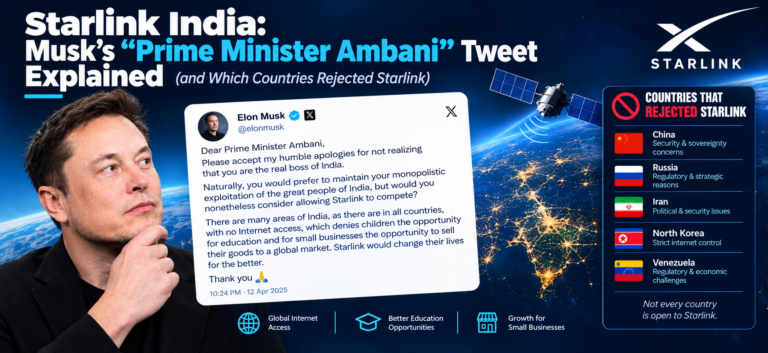
Elon Musk has picked a very public fight over Starlink India. On the night of October 9, 2026, he posted on X addressing Reliance chairman Mukesh Ambani as “Prime Minister Ambani,” and the post went viral within hours. The jab is the latest chapter in a long wait: Starlink still has no approval to start commercial service in India.

Here is what he actually said, how the government replied, what Starlink is, and which countries have said no to it.

What did Elon Musk tweet about Ambani?

The dispute escalated over three days:

  • Earlier this week: Musk accused unnamed “certain oligarchs” of trying to block Starlink from entering India.
  • Thursday, October 8: He named a target, asking, “Is Ambani the real boss of India?” He also said Starlink has spent five years following India’s laws and requirements.
  • Friday night, October 9: He opened a post with “Dear Prime Minister Ambani.” He went on to say Ambani would prefer to keep what Musk called a monopolistic hold on Indian consumers, and asked whether he would still let Starlink compete.

Musk has also been promoting the service heavily on X, arguing that internet access leads to education and prosperity. Congress leader Rahul Gandhi has since traded remarks with Musk over Ambani’s influence.

How did India respond?

The government pushed back quickly. The Ministry of Communications called its satellite-communications framework fair and non-discriminatory. It said Starlink, Reliance Jio and Bharti-backed OneWeb are all at “broadly the same regulatory stage,” which rejects the idea that Starlink is being singled out.

Telecom Minister Jyotiraditya Scindia added that India does not allow a monopoly in any sector. Ambani himself has stayed publicly silent so far.

Why is Starlink stuck in India?

Starlink is one of three companies hoping to enter India’s satellite-internet market, alongside Jio and OneWeb. Beyond the Musk-versus-Ambani noise, there are real regulatory questions. The two sides have already disagreed over how satellite spectrum should be allocated.

Bloomberg earlier reported that India’s security agencies had held back final clearances, with Starlink’s role in the recent Iran conflict cited as a factor. Starlink rejected that report and says it remains in talks with Indian authorities. For now, the launch is in limbo.

What is Starlink?

Starlink is a satellite internet service run by SpaceX. Instead of laying cables or building towers, it beams internet from thousands of small satellites in low Earth orbit to a compact dish at your home. That makes it useful in remote villages, at sea, and in disaster zones where regular broadband doesn’t reach.

It is now the largest commercial satellite internet network ever built. One tracker based on Starlink’s own data counted active consumer service in 166 countries and territories as of May 2026.

Which countries have rejected or banned Starlink?

Starlink is not welcome everywhere. Governments usually give a few reasons: national security, data sovereignty, local-ownership rules, and control over what citizens can access online. Here are the main cases reported so far.

CountryStatusMain reason reported
ChinaBannedUnlicensed foreign satellite communication is illegal; ship use has been penalised
RussiaBannedNot licensed; treated as illegal
North KoreaBannedTight state control over communications
IranIllegalNever licensed; a 2025 law targets unlicensed use
Afghanistan, Belarus, SyriaBlocked in Starlink’s own dataRestrictive regimes or sanctions (per one May 2026 tracker)
CameroonBanned since 2024Data security, sovereignty and unlicensed operations
NamibiaApplication rejected (March 2026)Did not meet local licensing conditions
South AfricaNo licenceLocal-ownership (B-BBEE) rules
TurkeyNot approvedApplied in 2023, still no green light
IndiaAwaiting approvalSecurity and regulatory clearances pending

Heads up: this map changes fast. Some countries have reversed course. Congo (DRC) restored approval in 2025, Bolivia lifted its restrictions in December 2025, and Ivory Coast announced in June 2026 that Starlink can offer fixed satellite internet from July. Lists also differ between sources, so check a country’s regulator before relying on any one list.

What happens next?

Nothing in the public record suggests a launch date. Starlink still needs final government clearances, and the public sparring may make the process more political, not faster. If approval does come, India’s huge rural market is exactly where Starlink wants to be. Until then, expect more posts from Musk.

Frequently asked questions

Is Starlink available in India?

Not yet. Starlink is still waiting for the approvals it needs to begin commercial service.

What did Elon Musk tweet to Ambani?

He addressed Mukesh Ambani as “Prime Minister Ambani” on October 9, 2026, and asked whether Ambani would allow Starlink to compete in India.

Did the Indian government respond?

Yes. The Ministry of Communications said its rules are fair and non-discriminatory, and the telecom minister said India doesn’t allow monopolies in any sector.

Which countries have banned Starlink?

China, Russia, North Korea and Iran are the most commonly cited. Cameroon has also banned it, and others such as Namibia and South Africa have refused to license it so far.

Who are Starlink’s rivals in India?

Reliance Jio and Bharti-backed OneWeb are the other two companies hoping to offer satellite internet.

Sources: The Wire, TechCrunch, Teslarati, American Bazaar, Cryptopolitan, Eurasian Times, Mappr, Starlink News, Crypto Times, Statista. Information is as reported on October 10, 2026. The accusations described are Musk’s allegations and have been denied by the Indian government.

CJP Protest at Jantar Mantar on October 10: What You Need to Know

0

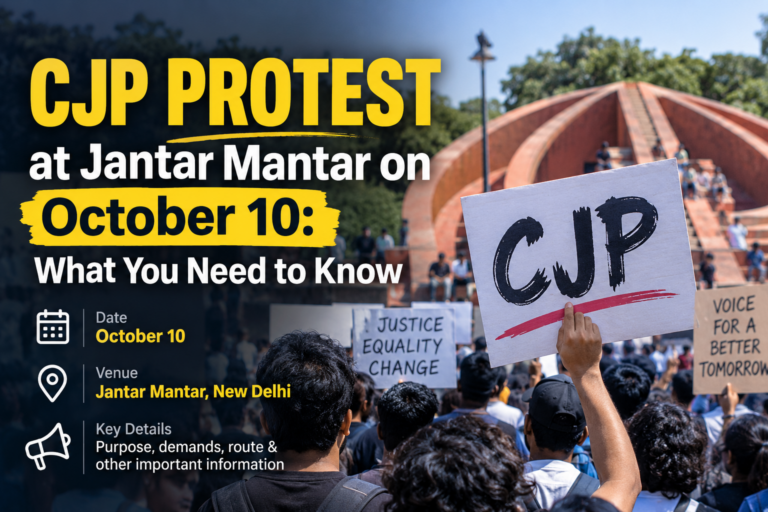
The CJP protest at Jantar Mantar is the biggest political story in Delhi today. The Cockroach Janta Party (CJP) called a youth-led demonstration for Saturday, October 10, 2026, demanding that Chief Election Commissioner Gyanesh Kumar resign. Delhi Police has refused permission. This guide explains the key facts in plain language.

Quick facts

  • Who: Cockroach Janta Party (CJP), with student and youth groups
  • What: Protest demanding the CEC’s resignation
  • Where: Jantar Mantar, New Delhi
  • When: Saturday, October 10, 2026
  • Police status: Permission denied; Section 163 in effect
  • Group’s position: The protest will be peaceful

What is the CJP protest about?

The CJP is demanding that Gyanesh Kumar resign as Chief Election Commissioner. The group, along with several opposition parties, has been protesting over alleged irregularities in the Special Intensive Revision (SIR) of electoral rolls.
They have also pointed to reports of differences within the three-member Election Commission.

CJP spokesperson Saurav Das has described the October 10 event as a Gen Z and youth protest, not just a party event. Founder Abhijeet Dipke has said the protest will be peaceful and has urged citizens who want free and fair elections to join.

How did it build up?

The Delhi protest follows a large CJP rally at Shivaji Park in Mumbai on October 2. Thousands attended despite police restrictions, and the rally was backed by Shiv Sena (UBT). At that event, the CJP called for a fresh agitation in Delhi if the CEC did not step down.

On October 7, the CJP said it had formally informed Delhi Police by submitting a letter and an undertaking at the Parliament Street police station.

Has Delhi Police allowed the protest?

No. On Friday, October 9, Delhi Police denied permission for the Jantar Mantar protest. Officials gave two main reasons:

  1. Late application: The letter was received on October 7, only three days before the event.
  2. Earlier violations: Police said the CJP did not follow directions or its own undertakings at a previous protest.

A senior police officer also said Section 163 is in effect, which means protests are not permitted at Jantar Mantar or elsewhere in the area.

What are the CJP’s allegations?

The CJP has made several claims that police and the government have not confirmed:

  • Activists in Chandrapur, Maharashtra, received police notices questioning their travel funding and asking them not to join the Delhi protest.
  • Leaders say the government is planning to arrest CJP leaders before the protest.

These are the group’s statements. Readers should wait for official confirmation.

Do you need permission to protest at Jantar Mantar?

Yes. Under Delhi Police guidelines, organisers must get prior permission to hold a demonstration at Jantar Mantar. Being a known protest site does not automatically entitle every group to use it. Courts have also held, in the 2020 Shaheen Bagh case, that public roads and spaces cannot be occupied indefinitely in the name of protest.

What should you expect in Delhi today?

In an earlier protest called by AAP and student and youth groups, around 1,000 people were detained in Delhi as police stopped them from reaching Jantar Mantar. With permission denied and Section 163 in force, heavy security and possible detentions are likely around the area. If you live or travel near central Delhi, check official traffic advisories before heading out.

Frequently asked questions

What does CJP stand for? CJP stands for Cockroach Janta Party, a youth-led political group.

Why is the CJP protesting? It wants Chief Election Commissioner Gyanesh Kumar to resign over alleged irregularities in the SIR of electoral rolls.

Is the October 10 protest legal? Delhi Police has denied permission and says Section 163 is in effect, so gatherings are not permitted. The CJP says it will protest peacefully.

Where is Jantar Mantar? Jantar Mantar is a well-known protest site in central New Delhi, near Parliament Street.

Will there be live updates? This situation is changing quickly. Follow major news outlets for live updates and official advisories.

The Takeaway

The CJP’s call to protest at Jantar Mantar on October 10 sets up a standoff between a youth-led movement and Delhi Police over the right to protest and the demand for the CEC’s resignation. We will update this article as official information comes in.

Sources: Business Standard, ThePrint (PTI), Siasat, UNI, OrissaPost, Patrika, NewsBytes.

Best Private Colleges for BTech in 2026

0

Choosing from India’s thousands of private engineering colleges can feel overwhelming — but a small set consistently stand out on the things that actually matter: faculty quality, lab infrastructure, industry tie-ups, and most importantly, placements. If you’re evaluating private colleges for BTech this admission cycle, here’s a research-backed shortlist covering top-tier national names and strong regional options worth considering.

Why Private Colleges Are a Serious Option for BTech in 2026

Private engineering colleges used to carry a “second choice after IITs” stigma. That’s changed. Several private institutions now out-place many government colleges, thanks to dedicated placement cells, international collaborations, and updated curricula in AI, data science, and robotics. The key is picking the right one for your budget, branch preference, and career goals — not just chasing a brand name.

Top Private Colleges for BTech in 2026

BITS Pilani

BITS Pilani consistently tops rankings for private engineering institutes in India, and 2026 is no exception — it ranks first among private universities in the IIRF Engineering Rankings. Admission is through BITSAT, and popular branches include CSE, ECE, and Mechanical. Tuition runs around ₹25 lakh for the full course, but the ROI is strong: CSE graduates report average packages near ₹18-20 LPA, with recruiters like Google, Microsoft, and Adobe hiring regularly across its Pilani, Goa, and Hyderabad campuses.

VIT Vellore

VIT holds NIRF Engineering rank #11 and is known for its scale — strong infrastructure, 600+ recruiters, and relatively accessible fees (around ₹7.8-8 lakh total) compared to its outcomes. Average CSE packages sit around ₹9-10 LPA, with top offers crossing ₹1 crore. VITEEE is the entrance exam, and the CSE/AI branches are the most competitive to get into.

SRM Institute of Science and Technology, Chennai

SRM ranks second among private engineering universities in the IIRF 2026 list and is known for its large campus, strong industry interaction, and wide branch choices including CSE, AI, and IT. Total fees are around ₹18.5 lakh, with average CSE placements near ₹7.9 LPA and recruiters spanning Amazon, Microsoft, Google, and major IT firms.

Manipal Institute of Technology (MIT Manipal)

MIT Manipal is a strong pick for students wanting deep exposure to emerging tech branches like AI and ECE. Admission is via MET, fees run ₹18-20 lakh, and the institute is known for solid industry exposure and a well-connected alumni network across tech and core engineering sectors.

Thapar Institute of Engineering and Technology

Thapar ranks consistently among the top five private engineering institutes nationally and is particularly strong in Electrical and CSE branches. It’s a good fit for students who want IIT-adjacent academic rigor without needing a JEE Advanced rank — admission is through JEE Main scores or institute-level tests.

Amrita Vishwa Vidyapeetham

A slightly more affordable option (around ₹13.2 lakh total fees) with solid outcomes — average CSE packages around ₹7.75 LPA and recruiters like Amazon, Dell, and TCS. Amrita is well-regarded for its research focus and campus culture, with multiple campuses across India.

ABES Engineering College, Ghaziabad

For students focused on the Delhi-NCR region, ABES Engineering College is one of the strongest private options outside the national “big name” bracket. Established in 2000 and NAAC A-accredited, ABES sits in the NIRF 201-300 band for Engineering (2024-25) and is ranked among the top colleges affiliated with AKTU — holding a strong regional standing in Uttar Pradesh.

What makes ABES worth shortlisting:

  • Fees are significantly lower than national private giants — total BTech fees range roughly ₹2.45-6.8 lakh depending on the course and year, making it accessible without taking on heavy education loans
  • Placement numbers have improved steadily, with over 1,680+ job offers recorded in recent years, a placement rate around 78-85%, and a highest package of ₹59.91 LPA
  • Admission is via JEE Main and UPTAC, with cutoffs considerably more accessible than BITS, VIT, or SRM — a practical option for students who don’t crack top-tier entrance ranks
  • NAAC A grade and NBA accreditation ensure the academic quality meets national benchmarks
  • Located in Ghaziabad, it offers NCR students proximity to Delhi’s job market without the cost of relocating to southern India’s tech hubs

For students who want a private engineering degree with manageable fees, decent placements, and don’t want to gamble on a very high entrance cutoff, ABES is a genuinely practical choice — not just a backup option.

How to Choose the Right Private College for BTech

Don’t rank purely by brand name. Compare these factors side by side:

  • Branch-specific placement data, not just the college average — CSE and AI branches often skew the average package upward
  • Total cost vs. projected ROI — a cheaper college with solid placements can outperform an expensive one in actual return
  • Entrance exam accessibility — know whether you realistically qualify for BITSAT/VITEEE-tier cutoffs or need a JEE Main/UPTAC-based option
  • Location and industry proximity — NCR, Bangalore, and Chennai-based colleges tend to have stronger local recruiter pipelines
  • Accreditation (NAAC, NBA) — a baseline quality check that shouldn’t be skipped

Conclusion

The “best” private college for BTech in 2026 depends on what you’re optimizing for. If budget isn’t a constraint and you can clear competitive entrance exams, BITS Pilani, VIT Vellore, and SRM remain the strongest national picks. But if you want a lower-cost, NCR-based option with genuinely strong and improving placement numbers, ABES Engineering College, Ghaziabad deserves a serious look — particularly for students targeting CSE or IT branches without the pressure of a top-percentile entrance score.


Frequently Asked Questions

Q: Which is the best private college for BTech in 2026?

A: BITS Pilani ranks first among private engineering universities per IIRF 2026, followed closely by VIT Vellore and SRM Chennai. The “best” choice ultimately depends on your budget, branch preference, and entrance exam scores.

Q: Is ABES Engineering College a good choice for BTech?

A: Yes, especially for NCR-based students. ABES offers NAAC A-accredited education, improving placement numbers (up to ₹59.91 LPA highest package), and significantly lower fees than national private giants, making it a strong value-for-money option.

Q: What entrance exams are needed for private BTech colleges?

A: Most top private colleges use their own exams — BITSAT (BITS Pilani), VITEEE (VIT), MET (Manipal) — while others like ABES, SRM, and Thapar accept JEE Main scores alongside state-level exams like UPTAC.

Q: Are private colleges for BTech better than government colleges?

A: Not universally — top government colleges (IITs, NITs) still lead in reputation and cost-efficiency. But top private colleges like BITS Pilani and VIT often match or exceed mid-tier government colleges in placements and infrastructure.

Q: How much does a private BTech degree cost in India?

A: It varies widely — from around ₹2.5-7 lakh total at colleges like ABES Engineering College to ₹25+ lakh at BITS Pilani, depending on brand, infrastructure, and location.

Best Data Science Institute in India 2026

0

Choosing the best data science institute in India has never been more important — or more confusing. With dozens of ed-tech platforms, university programs, and bootcamps promising to turn you into a “job-ready data scientist,” picking the right one can make or break your career switch.

This guide cuts through the noise. Below is a curated, no-fluff list of India’s top data science institutes in 2026, based on curriculum depth, mentorship quality, placement support, and real-world project exposure.

What Makes a Data Science Institute “The Best”?

Before jumping into the list, it helps to know what actually separates a good institute from a great one. Look for:

  • Practical, project-based learning — not just theory and slides
  • Experienced faculty and mentors who’ve worked as actual data scientists
  • Placement assistance with real hiring partnerships, not just “resume tips”
  • Updated curriculum covering AI, machine learning, and GenAI tools — not just legacy statistics
  • Flexible learning formats for working professionals

With that criteria in mind, here are the institutes worth your attention in 2026.

Top Data Science Institutes in India 2026

1. AnalytixLabs

AnalytixLabs consistently ranks among the top choices for serious data science learners in India, and for good reason. It’s known for a strong, structured curriculum covering Python, machine learning, deep learning, and generative AI, backed by mentors with real industry experience rather than just academic backgrounds.

What sets AnalytixLabs apart is its focus on practical application — capstone projects, case studies, and hands-on tool training (SQL, Power BI, Tableau, and more) rather than just certification-chasing. It’s a strong fit for working professionals looking for a career switch, as well as graduates wanting industry-relevant skills before entering the job market.

Best for: Professionals wanting mentorship-driven, project-heavy training with strong placement support.

2. Jigsaw Academy (UNext)

One of India’s older and more established analytics training providers, Jigsaw Academy offers a range of data science and analytics programs, often in partnership with universities. Its strength lies in structured, beginner-to-advanced learning paths for those newer to the field.

Best for: Beginners wanting a university-affiliated certificate alongside training.

3. Imarticus Learning

Imarticus is well known for finance and data-focused upskilling programs with a heavy emphasis on placement partnerships. Their data science tracks typically combine live instructor-led sessions with real business case studies.

Best for: Learners prioritizing placement tie-ups and corporate hiring networks.

4. Great Learning

Backed by partnerships with top institutes like IIT and Great Lakes, Great Learning offers both short-term and postgraduate-level data science programs. It’s a solid option for learners who want an academically rigorous, certificate-backed credential.

Best for: Learners wanting an institute-backed credential with academic weight.

5. UpGrad

UpGrad partners with universities and IIITs to offer degree and diploma programs in data science, often with a stronger academic structure than typical bootcamps. It suits learners who prefer longer, degree-style programs over short-term bootcamps.

Best for: Learners wanting a formal degree/diploma rather than a short course.

6. Simplilearn

Simplilearn is one of the most recognized names in online upskilling, offering data science bootcamps often in collaboration with global universities. Its strength is scale — a wide course catalog and flexible self-paced options.

Best for: Self-paced learners who want flexibility and brand recognition on their certificate.

7. IMS Proschool

A long-standing player in India’s analytics education space, IMS Proschool offers classroom and online data science programs with a focus on practical tool training and placement support for early-career professionals.

Best for: Students and early-career professionals wanting classroom-style learning.

How to Choose the Right Institute for You

There’s no single “best” institute for everyone — the right choice depends on your starting point and goals:

  • Career switchers with some experience → Look for mentorship-heavy, project-based programs like AnalytixLabs
  • Fresh graduates → University-affiliated programs (Great Learning, UpGrad) add academic credibility
  • Working professionals needing flexibility → Self-paced platforms like Simplilearn fit tighter schedules
  • Budget-conscious learners → Compare placement support and mentor access, not just course price

Whichever institute you choose, prioritize one that pushes you to build a real portfolio — recruiters in 2026 care far more about demonstrated project work than certificates alone.

Final Thoughts

The best data science institute for you ultimately depends on your career stage, learning style, and how much hands-on mentorship you need. Institutes like AnalytixLabs stand out for those who want structured, mentor-led, project-heavy training that mirrors real industry work — while university-backed platforms suit those chasing formal credentials.

Whatever you choose, treat the decision the way you’d treat a job application: research the curriculum, talk to alumni if possible, and make sure the program is teaching skills companies are actually hiring for in 2026 — not just what was trendy three years ago.


FAQs

1. Which is the best data science institute in India for beginners?
Institutes with structured, beginner-friendly curricula and strong mentor support — such as AnalytixLabs or Great Learning — tend to work best for those starting from scratch.

2. Is AnalytixLabs good for working professionals?
Yes. AnalytixLabs is widely used by working professionals because of its flexible batches, mentorship model, and focus on practical, job-relevant projects.

3. How long does it take to learn data science in India?
Most structured programs range from 4 to 12 months, depending on whether you choose a short bootcamp or a comprehensive postgraduate-style program.

4. Do I need a technical background to join a data science course?
No. Most institutes, including AnalytixLabs, offer foundational modules in Python and statistics for learners from non-technical backgrounds.

5. What should I check before enrolling in a data science institute?
Check curriculum relevance (AI/ML/GenAI coverage), mentor credentials, project-based learning, and genuine placement support — not just marketing claims.