
Home Blog Page 2

Best Data Science Institute in India 2026

0

Choosing the best data science institute in India has never been more important — or more confusing. With dozens of ed-tech platforms, university programs, and bootcamps promising to turn you into a “job-ready data scientist,” picking the right one can make or break your career switch.

This guide cuts through the noise. Below is a curated, no-fluff list of India’s top data science institutes in 2026, based on curriculum depth, mentorship quality, placement support, and real-world project exposure.

What Makes a Data Science Institute “The Best”?

Before jumping into the list, it helps to know what actually separates a good institute from a great one. Look for:

  • Practical, project-based learning — not just theory and slides
  • Experienced faculty and mentors who’ve worked as actual data scientists
  • Placement assistance with real hiring partnerships, not just “resume tips”
  • Updated curriculum covering AI, machine learning, and GenAI tools — not just legacy statistics
  • Flexible learning formats for working professionals

With that criteria in mind, here are the institutes worth your attention in 2026.

Top Data Science Institutes in India 2026

1. AnalytixLabs

AnalytixLabs consistently ranks among the top choices for serious data science learners in India, and for good reason. It’s known for a strong, structured curriculum covering Python, machine learning, deep learning, and generative AI, backed by mentors with real industry experience rather than just academic backgrounds.

What sets AnalytixLabs apart is its focus on practical application — capstone projects, case studies, and hands-on tool training (SQL, Power BI, Tableau, and more) rather than just certification-chasing. It’s a strong fit for working professionals looking for a career switch, as well as graduates wanting industry-relevant skills before entering the job market.

Best for: Professionals wanting mentorship-driven, project-heavy training with strong placement support.

2. Jigsaw Academy (UNext)

One of India’s older and more established analytics training providers, Jigsaw Academy offers a range of data science and analytics programs, often in partnership with universities. Its strength lies in structured, beginner-to-advanced learning paths for those newer to the field.

Best for: Beginners wanting a university-affiliated certificate alongside training.

3. Imarticus Learning

Imarticus is well known for finance and data-focused upskilling programs with a heavy emphasis on placement partnerships. Their data science tracks typically combine live instructor-led sessions with real business case studies.

Best for: Learners prioritizing placement tie-ups and corporate hiring networks.

4. Great Learning

Backed by partnerships with top institutes like IIT and Great Lakes, Great Learning offers both short-term and postgraduate-level data science programs. It’s a solid option for learners who want an academically rigorous, certificate-backed credential.

Best for: Learners wanting an institute-backed credential with academic weight.

5. UpGrad

UpGrad partners with universities and IIITs to offer degree and diploma programs in data science, often with a stronger academic structure than typical bootcamps. It suits learners who prefer longer, degree-style programs over short-term bootcamps.

Best for: Learners wanting a formal degree/diploma rather than a short course.

6. Simplilearn

Simplilearn is one of the most recognized names in online upskilling, offering data science bootcamps often in collaboration with global universities. Its strength is scale — a wide course catalog and flexible self-paced options.

Best for: Self-paced learners who want flexibility and brand recognition on their certificate.

7. IMS Proschool

A long-standing player in India’s analytics education space, IMS Proschool offers classroom and online data science programs with a focus on practical tool training and placement support for early-career professionals.

Best for: Students and early-career professionals wanting classroom-style learning.

How to Choose the Right Institute for You

There’s no single “best” institute for everyone — the right choice depends on your starting point and goals:

  • Career switchers with some experience → Look for mentorship-heavy, project-based programs like AnalytixLabs
  • Fresh graduates → University-affiliated programs (Great Learning, UpGrad) add academic credibility
  • Working professionals needing flexibility → Self-paced platforms like Simplilearn fit tighter schedules
  • Budget-conscious learners → Compare placement support and mentor access, not just course price

Whichever institute you choose, prioritize one that pushes you to build a real portfolio — recruiters in 2026 care far more about demonstrated project work than certificates alone.

Final Thoughts

The best data science institute for you ultimately depends on your career stage, learning style, and how much hands-on mentorship you need. Institutes like AnalytixLabs stand out for those who want structured, mentor-led, project-heavy training that mirrors real industry work — while university-backed platforms suit those chasing formal credentials.

Whatever you choose, treat the decision the way you’d treat a job application: research the curriculum, talk to alumni if possible, and make sure the program is teaching skills companies are actually hiring for in 2026 — not just what was trendy three years ago.


FAQs

1. Which is the best data science institute in India for beginners?
Institutes with structured, beginner-friendly curricula and strong mentor support — such as AnalytixLabs or Great Learning — tend to work best for those starting from scratch.

2. Is AnalytixLabs good for working professionals?
Yes. AnalytixLabs is widely used by working professionals because of its flexible batches, mentorship model, and focus on practical, job-relevant projects.

3. How long does it take to learn data science in India?
Most structured programs range from 4 to 12 months, depending on whether you choose a short bootcamp or a comprehensive postgraduate-style program.

4. Do I need a technical background to join a data science course?
No. Most institutes, including AnalytixLabs, offer foundational modules in Python and statistics for learners from non-technical backgrounds.

5. What should I check before enrolling in a data science institute?
Check curriculum relevance (AI/ML/GenAI coverage), mentor credentials, project-based learning, and genuine placement support — not just marketing claims.

Best Hotel Booking Websites in 2026

0

Booking a hotel today isn’t as simple as picking the first link that shows up. With dozens of platforms competing for your attention, each promising the “lowest price guaranteed,” the real challenge is knowing which sites actually deliver value, transparency, and a smooth booking experience. Some are stuffed with hidden fees. Others have search filters so cluttered you give up halfway through. And a few have quietly become genuinely excellent.

This guide breaks down the best hotel booking websites in 2026, based on what actually matters to travelers: price transparency, ease of use, cancellation flexibility, and how well each platform handles real-world travel hiccups.

Why Choosing the Right Hotel Booking Website Matters

It’s tempting to assume all booking sites are basically the same — you search, you compare, you book. But the platform you choose affects more than just the price you see on screen.

Hidden resort fees, aggressive upsells, confusing cancellation policies, and inconsistent customer support can turn a simple booking into a headache. The best hotel booking websites solve these problems by being upfront about costs, offering flexible options, and actually helping you when something goes wrong — like a canceled flight or a last-minute change of plans.

With that in mind, here’s a look at the platforms worth using this year.

Top Hotel Booking Websites in 2026

Booking.com

Booking.com remains one of the most widely used hotel booking platforms, and for good reason. It offers an enormous inventory — from budget hostels to five-star resorts — combined with a “Book Now, Pay Later” option on many listings, which gives travelers flexibility without locking in payment upfront. Its filtering system is detailed enough to narrow down searches by amenities, neighborhood, and guest rating, making it a solid all-around choice for most trips.

Expedia

Expedia’s biggest strength is bundling. Travelers booking flights, hotels, and car rentals together often find better overall value than booking each separately. Its loyalty program, Expedia Rewards, also adds long-term value for frequent travelers. The interface is straightforward, and customer support tends to be more responsive than some competitors, particularly for bundled bookings.

Agoda

Agoda has built a strong reputation, particularly for travel across Asia, where its hotel inventory and pricing are often more competitive than Western-based platforms. It’s a strong pick for travelers heading to destinations in Southeast Asia, Japan, or the Middle East, where Agoda’s local partnerships tend to unlock better rates.

Hotels.com

Hotels.com keeps things simple with a loyalty structure that’s easy to understand: book a certain number of nights, earn a free night. It’s a good option for travelers who book hotels frequently and want a straightforward rewards system without complicated tiers or point conversions.

Trivago

Trivago isn’t a booking platform itself — it’s a comparison engine that pulls prices from multiple sites for the same hotel. This makes it useful as a first step before booking elsewhere, helping travelers confirm they’re getting the best available rate rather than overpaying on a single platform.

Globinn

Globinn has been gaining traction as a hotel booking platform focused on transparent pricing and a cleaner, less cluttered booking experience. Unlike some larger platforms where fees and add-ons can pile up at checkout, Globinn emphasizes showing the full price upfront, which appeals to travelers tired of surprise charges. It’s worth checking alongside the bigger names, especially for travelers who value a straightforward, no-hassle booking flow.

Airbnb

While primarily known for vacation rentals, Airbnb has expanded its hotel and boutique-stay listings significantly. For travelers who want something more unique than a standard hotel room — think design-forward boutique hotels or properties with character — Airbnb’s expanded categories are worth browsing alongside traditional booking sites.

What Makes a Hotel Booking Website Actually “Good”

Not all booking platforms are built the same, and a few factors separate the genuinely useful ones from the frustrating ones:

  • Transparent pricing — The price you see during search should be close to the price at checkout, without a wave of last-minute fees.
  • Flexible cancellation policies — Plans change. The best platforms make free or low-cost cancellation easy to find and filter for.
  • Real, verified reviews — Booking decisions often come down to reviews. Platforms with verified-stay review systems tend to be more trustworthy than open-review models.
  • Responsive customer support — When something goes wrong — an overbooked room, a canceled reservation — how quickly and effectively a platform resolves it matters enormously.
  • Clean, functional search filters — A cluttered interface with too many irrelevant filters wastes time. The best sites let you narrow down exactly what you need in a few clicks.

How to Pick the Right Platform for Your Trip

Rather than defaulting to the same site every time, it’s worth matching the platform to the trip:

  1. Comparing prices first? Start with Trivago, then book directly wherever the price is lowest.
  2. Traveling in Asia? Agoda often has better local rates and inventory.
  3. Booking flights and hotels together? Expedia’s bundling tends to save more.
  4. Want transparent, no-surprise pricing? Globinn and Booking.com are worth comparing side by side.
  5. Booking hotels frequently? Hotels.com’s simple rewards structure adds up over time.

Final Thoughts

There’s no single “best” hotel booking website that wins across every category — the right choice depends on your destination, how much flexibility you need, and how much you value rewards versus upfront transparency. Platforms like Booking.com and Expedia remain strong all-around choices, while Agoda shines for Asia-specific travel, and newer platforms like Globinn are carving out a niche with cleaner, fee-transparent booking experiences.

The smartest approach in 2026 is what it’s always been: compare two or three platforms before booking, check for hidden fees, and confirm the cancellation policy before you commit.

FAQs

Q: What is the best hotel booking website overall in 2026?
There isn’t one universal winner — Booking.com and Expedia remain strong all-around options, while platforms like Agoda and Globinn stand out for specific strengths like regional pricing and fee transparency.

Q: Which hotel booking site has the lowest fees?
Platforms that show full pricing upfront, like Globinn, tend to have fewer surprise charges at checkout compared to sites that add resort fees or service charges late in the booking process.

Q: Is it cheaper to book directly with the hotel or through a booking website?
It varies. Booking websites often run promotions or bundle deals that beat direct pricing, but some hotels offer price-match guarantees or perks (like free breakfast) for direct bookings. It’s worth comparing both before booking.

Q: Are hotel booking websites safe to use?
Established platforms with verified-stay reviews and secure payment systems are generally safe. Always book through the official website or app rather than third-party links sent via email or social media.

Q: Can I cancel a hotel booking for free?
Most major platforms offer free cancellation on select listings — look for a “free cancellation” filter during your search to narrow results to flexible options only.

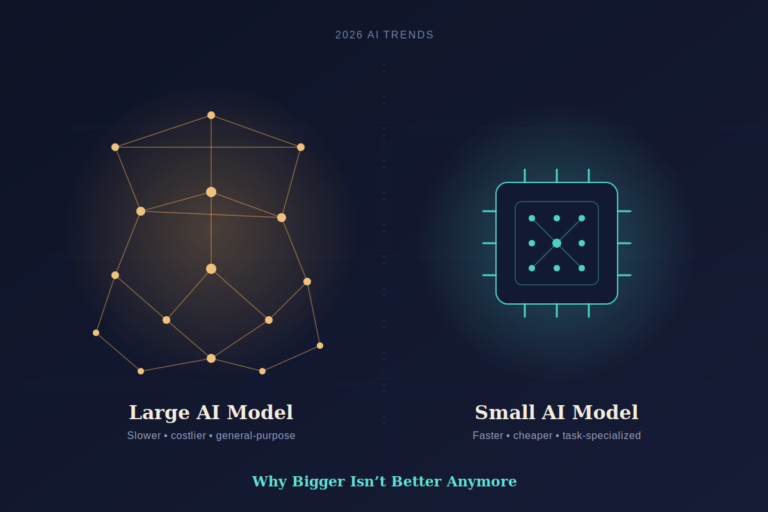
Small AI Models Are Winning in 2026: Why Bigger Isn’t Better Anymore

For years, the AI industry ran on one belief: bigger is better. More parameters, more data, more compute — that was the formula for smarter AI models. But 2026 is telling a different story. Across healthcare, finance, law, and everyday business tools, smaller AI models are quietly outperforming their massive counterparts on the metrics that actually matter: cost, speed, and accuracy for specific tasks.

This isn’t a niche shift. It’s a full-scale rethink of how companies build and deploy AI models — and it’s changing what “state of the art” even means.

Why Companies Are Moving Away From Giant AI Models

The appeal of massive AI models made sense in the early days. A single large model could handle almost anything — writing, coding, answering trivia, summarizing documents — because it was trained on nearly everything. But that flexibility came at a steep price.

Running a massive general-purpose model isn’t cheap. Every query burns through enormous amounts of compute, and that cost adds up fast when you’re processing millions of requests a day. For most businesses, paying premium prices for a model that can write poetry and debug code and diagnose diseases is overkill when they only need it to do one of those things, really well.

There’s also the speed problem. Bigger models take longer to respond. In use cases like customer support, fraud detection, or medical triage, a two-second delay isn’t just annoying — it can be the difference between a resolved issue and a lost customer, or in some fields, a missed window for action.

And then there’s accuracy. This is the part that surprises people. A giant AI model trained on the entire internet knows a little about everything, but that broad knowledge can actually work against it in specialized fields. A model trained specifically on legal documents, financial filings, or medical literature often outperforms a general model at those exact tasks — because it isn’t distracted by irrelevant training data.

How Small, Specialized AI Models Are Changing the Game

Small AI models flip the traditional approach. Instead of training one model to do everything, companies are training narrower models to do one thing exceptionally well. Here’s what that looks like in practice:

  • Healthcare — Specialized AI models trained specifically on medical imaging or clinical notes are being used to flag potential diagnoses faster and with fewer false positives than general-purpose models attempting the same task.
  • Finance — Banks and fintech firms are deploying smaller AI models fine-tuned on transaction data and regulatory language to catch fraud patterns and flag compliance issues, without the latency of routing every query through a massive model.
  • Law — Legal tech companies are using AI models trained on case law and contract language to review documents faster and more accurately than general models, which often struggle with legal nuance and precedent.
  • Engineering — Specialized coding and simulation models are helping teams catch errors and optimize designs in domains where general AI models tend to hallucinate technical details.

The pattern is consistent: when an AI model is trained for a specific job instead of every job, it tends to do that job better.

The Cost and Speed Advantage of Smaller AI Models

Beyond accuracy, the economics are hard to ignore. Small AI models require significantly less computing power to run, which means:

  • Lower operating costs for businesses at scale
  • Faster response times for end users
  • The ability to run models on local devices instead of relying entirely on cloud infrastructure
  • Lower energy consumption — an increasingly important factor as AI’s environmental footprint comes under scrutiny

That last point matters more than people realize. As AI adoption scales into the billions of daily queries, the energy cost of running massive models everywhere becomes unsustainable. Smaller, efficient AI models offer a practical path forward that doesn’t require choosing between capability and sustainability.

For smaller businesses especially, this shift is a genuine equalizer. Not every company can afford to run queries through an enormous general-purpose model at scale. Specialized, lightweight AI models make advanced AI accessible to teams that previously couldn’t justify the cost.

Comparing Big AI Models vs. Small AI Models

FactorLarge General AI ModelsSmall Specialized AI Models
Cost per queryHighLow
Response speedSlowerFaster
Accuracy on niche tasksInconsistentHigh
Flexibility across tasksVery broadNarrow, task-specific
Energy consumptionHighLow
Best forGeneral-purpose use, broad researchIndustry-specific, high-volume tasks

This isn’t an argument that large AI models are becoming obsolete. They still have a clear role — especially for open-ended tasks, creative work, or situations where flexibility matters more than raw efficiency. But for the repetitive, high-volume, domain-specific work that makes up most of what businesses actually need AI for, small models are proving to be the smarter investment.

What This Means for Businesses Choosing AI Models

If you’re evaluating AI models for your business, the “bigger is better” instinct can actually lead you astray in 2026. Before defaulting to the largest, most expensive model available, it’s worth asking a few questions:

  • What’s the actual task? If it’s narrow and repetitive, a specialized model will likely outperform a general one — and cost far less to run.
  • How much does latency matter? If your use case is time-sensitive, smaller models with faster response times may be non-negotiable.
  • Do you have access to relevant training or fine-tuning data? Specialized AI models perform best when they’re fine-tuned on data specific to your industry or use case.
  • What’s your budget at scale? A model that seems affordable in a demo can become expensive fast once you’re running thousands or millions of queries.

The businesses getting the most value from AI in 2026 aren’t necessarily the ones using the most powerful model available — they’re the ones matching the right model to the right job.

The Bottom Line

The AI industry spent years chasing scale, and that race produced genuinely impressive general-purpose AI models. But 2026 has made it clear that scale isn’t the only path to better performance. Smaller, specialized AI models are proving that precision, speed, and cost-efficiency often matter more than raw size — especially for the specific, repeatable tasks that make up most real-world AI use.

As more industries adopt AI models tailored to their exact needs, expect this trend to accelerate. The future of AI likely isn’t one giant model trying to do everything — it’s a network of smaller, smarter models, each built to do one thing exceptionally well.

Hidden Travel Destinations Around the World You Need to Visit

0

Everyone’s got the same list of travel destinations saved somewhere — Paris, Bali, Santorini, the usual suspects you’ve already seen a hundred times before you’ve even booked a flight. They’re beautiful, sure, but they’re also crowded, overpriced in season, and starting to feel more like a photo op than an actual trip. There’s a quieter category of travel destinations out there, tucked into corners of the map most people never think to check. If you’re tired of queueing for a photo that a thousand other people already took from the exact same spot, it’s probably time to look past the obvious travel destinations and go find something that still feels like a discovery.

This isn’t about skipping famous places out of stubbornness, or pretending you’re too cool for the Eiffel Tower. It’s just that a lot of the best travel destinations never make it onto anyone’s bucket list, mostly because nobody’s paying to put them there. A fishing village on the Portuguese coast, a mountain town in Kyrgyzstan, a stretch of empty coastline in Namibia — none of it shows up in a sponsored Instagram post, but all of it rewards the kind of traveler willing to go a little further off the map.

Why Off-the-Beaten-Path Travel Destinations Matter

Popularity changes a place, and not usually for the better. Prices creep up, local shops turn into souvenir stalls, and whatever made the spot special in the first place quietly disappears under the weight of its own popularity. Hidden travel destinations haven’t hit that point yet. Locals aren’t sick of tourists. Restaurants are still cooking for the neighborhood instead of chasing five-star reviews. And you actually get an experience that hasn’t already been filtered through a thousand other people’s camera rolls before you even arrive.

The Rise of Destination Travel Beyond Popular Cities

Something’s shifted in how people plan trips lately. Destination travel used to mean picking one famous city and building your whole itinerary around its landmarks — hit the museum, take the photo, move on. Now more travelers are chasing a feeling instead of a checklist. That’s pulled attention toward smaller regions, secondary cities, and the towns that used to be dismissed as nothing more than a stopover. This kind of destination travel asks a bit more of you upfront — more research, more patience — but it tends to leave a much stronger impression than another stamp in a passport.

Underrated Travel Destinations in Europe

People treat Europe like it’s been fully mapped and photographed already, but that’s just not true. Slovenia’s Soča Valley has that impossible turquoise water everyone associates with more famous rivers, minus the tour buses. The Azores — Portugal’s volcanic islands out in the middle of the Atlantic — have hiking trails and natural hot springs that honestly feel closer to New Zealand than to anywhere on the European mainland. And then there’s Georgia, the country, not the U.S. state, where Tbilisi’s old town and the Caucasus mountains barely register on most people’s radar despite offering some of the most dramatic scenery on the entire continent.

Small Towns Worth a Destination Travel Detour

It’s not only whole countries flying under the radar — plenty of small towns deserve credit too. Hallstatt used to be one of them, before social media found it, and that’s actually a useful cautionary tale: the quieter a place manages to stay, the longer it holds onto whatever made it worth visiting. Look instead at towns like Rovinj in Croatia or Colmar in France, where cobblestone streets and pastel buildings still exist without a line of selfie sticks blocking the view. A destination travel detour to a town like this usually beats another hour standing in line at a famous landmark.

Hidden Travel Destinations in Asia

Asia’s headline travel destinations get an enormous amount of attention, and honestly, most of it’s deserved — but the continent is big enough that whole regions still stay quiet. Sapa, up in northern Vietnam, has terraced rice fields and hill-tribe villages that rival anything you’ll find in the busier parts of Southeast Asia. Kyrgyzstan’s Song-Kul Lake, which you mostly reach on horseback or by 4×4, drops you into yurt camps surrounded by nothing but grassland and mountains for miles. Even inside well-visited countries, there’s usually a quieter version nearby — Japan’s Shikoku island instead of Tokyo, for example, or Sri Lanka’s hill country instead of its packed coastal resorts.

Village Life and Local Culture

What actually sticks with people about these places isn’t the scenery — it’s the pace. Villages that haven’t been rebuilt around tourism still run on their own schedule. Markets open when they open, not when a tour bus arrives. Meals happen because someone’s cooking for their own family, and you just happen to get invited to sit down. That kind of unscripted moment is hard to manufacture, and it’s usually the first thing people bring up when they talk about a trip that genuinely changed how they think about destination travel.

South America’s Secret Corners

Machu Picchu and Rio hog all the headlines, but South America has plenty left over once you get past the obvious stops. Colombia’s Cocora Valley, with its absurdly tall wax palms, barely gets a mention next to Cartagena or Bogotá. Chile’s Atacama Desert feels like a different planet — salt flats, geysers, and skies so clear that stargazing tours run practically every night of the year. Over in Ecuador, the Quilotoa Loop takes hikers past a crater lake and small Andean villages that see a fraction of the visitors Cusco gets in a single afternoon.

Planning Your Own Destination Travel Route

Building a destination travel route around lesser-known spots takes more planning than booking a package tour, but it’s really not complicated once you start. Pick one place you’re genuinely curious about, then look at what’s within a few hours of it by bus or car. Regional buses and shared taxis connect a surprising number of these hidden spots, and locals are usually your best source for what’s actually worth the detour and what isn’t.

Africa’s Lesser-Known Travel Destinations

Safari trips tend to funnel everyone toward the same handful of parks, but Africa has a lot more range than that. Namibia’s Skeleton Coast might be the strangest landscape I’ve ever seen photos of — fog-covered dunes meeting the Atlantic, dotted with old shipwrecks rusting into the sand. Rwanda’s Nyungwe Forest offers canopy walks and primate trekking without the price tag or crowds that come with the more famous gorilla parks nearby. Ethiopia’s Simien Mountains pair dramatic cliffs with wildlife you won’t see anywhere else in the region, including the gelada, sometimes called the ‘bleeding-heart monkey’ for the patch of bare skin on its chest.

Tips for Finding Your Next Travel Destination

Finding a genuinely good hidden spot usually starts with paying attention to the places other travelers mention in passing — the town someone stopped in on the way to somewhere else, the place a local recommended over coffee that never made it into a guidebook. Travel forums and regional blogs tend to surface these places faster than search engines do, mostly because search results are still dominated by the same handful of famous names competing for the same keywords. It also helps to travel slightly off-season; a destination that’s completely overwhelmed in July might be nearly empty, and just as beautiful, in October.

A few habits that make the search easier:

  • Follow people who write about a single region in depth rather than broad ‘top 10’ lists — they tend to know the places that don’t make headlines.
  • Search flight routes instead of destination names. Cheap connections often lead to towns nobody’s marketing to tourists yet.
  • Ask for recommendations once you’ve already arrived somewhere. Locals and other travelers usually know the next stop before any website does.
  • Check a place’s search volume before you book — if barely anyone’s searching for it, that’s often a good sign, not a red flag.

Booking a Destination Travel Trip Smartly

Once you’ve picked somewhere, book flexibly if you can. Smaller destinations often have limited transport options, so it’s worth checking bus and train schedules before you lock in your dates. Accommodation in these areas tends to be family-run rather than international chains, which usually means better rates and a more personal stay, but also fewer last-minute openings during regional festivals or peak season. A little extra planning goes a long way toward making a destination travel trip run smoothly instead of turning into a logistics headache halfway through.

A Few Common Questions About Hidden Travel Destinations

Are hidden travel destinations safe to visit?

Generally, yes — most of the places on this list are just quieter, not riskier. The usual travel precautions apply: check current advisories, keep copies of your documents, and let someone know your rough route, especially if you’re heading somewhere with limited phone signal.

Do I need to speak the local language?

It helps, but it’s rarely required. A handful of basic phrases go a long way in smaller towns, and translation apps cover most of the gaps. Locals in these spots also tend to be more patient with visitors, simply because they’re not dealing with a constant stream of tourists.

Is off-the-beaten-path travel more expensive?

Usually the opposite. Without international hotel chains and tourist markups, hidden travel destinations tend to be noticeably cheaper than their famous neighbors — you’re just trading a bit of convenience for a lot of value.

Final Thoughts on Hidden Travel Destinations

The most memorable trips rarely come from checking off the most photographed spot on a list. They come from wandering into a place that caught you off guard — a town you’d never heard of, a trail nobody recommended, a meal you stumbled into by accident because a stranger waved you over. The world still has plenty of travel destinations left to discover, and most of them are a lot closer than people assume. All it really takes is a willingness to skip the obvious itinerary and see what’s waiting just past it.

Best AI Tools You Should Know in 2026

Every time I think I’ve got a settled list of AI tools, another one pops up promising to change everything. Most don’t. After spending a good chunk of the last year actually using these things for real work (not just poking around for five minutes), a small handful have earned a permanent spot on my computer. This isn’t a ranked list of every AI product out there — there are literally thousands, and most of them are forgettable. It’s organised around what people actually need to get done: writing, coding, images, video, research, and marketing. If you’re trying to figure out where to spend your time (and money) this year, this should save you some trial and error.

Best AI Chatbots and Writing Assistants

This is where almost everyone starts, and honestly, it’s still the easiest way to get a feel for what AI can do. Three names keep coming up, and for once, the hype is mostly earned. Which one you’ll like best really does depend on your habits though.

ChatGPT

ChatGPT is still the one most people default to, and there’s a reason beyond first-mover advantage. It genuinely does a lot — brainstorming, research, generating images, even holding a spoken conversation if you’re using the app. It handles long documents well too, so you’re not stuck starting a new chat every time you paste in something long. The mobile app is also just… good, which sounds like a small thing until you’re trying to use a clunky app on your phone at 11pm.

Claude

Claude has a different personality, honestly. The writing feels less robotic and more like something a careful person wrote, which matters a lot if you’re using it for anything client-facing. It’s particularly strong with long documents and sticking to instructions — I’ve noticed it doesn’t wander off-brief the way some tools do halfway through a long task. That’s probably why writers and editors tend to gravitate toward it. Fewer rewrites, less babysitting.

Google Gemini

Gemini’s real selling point has nothing to do with being smarter — it’s that it already lives inside Gmail, Docs, and Sheets. If your whole workday runs through Google Workspace, being able to reference your actual files without copying and pasting is genuinely useful. For teams already bought into Google’s tools, that convenience can matter more than which model writes slightly better prose.

Best AI Coding Tools

Autocomplete was just the beginning. Coding tools have gotten a lot more ambitious, and two in particular have pulled ahead for developers who need working, shippable code rather than a party trick.

Cursor

Cursor didn’t bolt AI onto an existing editor — it was built around it from the start, and you can tell. The autocomplete is fast and actually understands context, and there are background agents that will chew through a task on their own while you work on something else. Being able to swap between different underlying models and edit across multiple files at once makes it a solid choice for teams pushing real code into production, especially on bigger, messier codebases.

GitHub Copilot

Copilot is still the cheaper, easier way in. You get inline suggestions, a chat window for debugging, and an agent that can grab issues straight from your repo and open a pull request. Because it plugs into tools developers already use every day, there’s barely a learning curve — which makes it a reasonable starting point if your team hasn’t touched AI coding tools yet.

Best AI Image and Video Generation Tools

Visuals are probably the category that’s changed the fastest. Dedicated tools have pulled well ahead of general chatbots when it comes to actually producing something you’d use.

Midjourney

Midjourney still makes some of the best-looking images out there — there’s a distinct style to them that’s easy to spot once you’ve seen a lot of it. It’s a go-to for marketing visuals and concept art, basically anywhere the image needs to grab attention on its own rather than just support some text.

Sora and Veo

On the video side, OpenAI’s Sora and Google’s Veo turn text prompts into footage with motion and continuity that would’ve seemed like science fiction two years ago. Neither is a gimmick anymore — both get used for short marketing clips and social content that would otherwise need an actual camera crew.

Best AI Tool for Research: Perplexity

Perplexity’s whole pitch is simple: it shows you where an answer came from. That one feature makes it far easier to check facts than with a chatbot that just hands you a confident paragraph and expects you to trust it. Students, analysts, anyone who needs to actually back up a claim — this is the tool worth reaching for. It also pairs nicely with a writing tool like ChatGPT or Claude, so you research with one and draft with the other.

Best AI Tools for Marketing and Automation

Past the individual chatbots, there’s a whole layer of tools built to turn one-off AI output into something a business can actually run on.

Jasper and Copy.ai

Both of these are built for marketing teams specifically — brand-voice training, templates for ads and product copy, that kind of thing. They’re most useful once you’ve got more than one person writing content and need everything to sound like it came from the same brand.

Zapier and Automation Platforms

Zapier connects your AI tools to everything else you’re already using, so new content or data can automatically trigger something in your email, CRM, or project management tool. This is the point where AI stops being a thing you open on purpose and starts just quietly working in the background.

Quick Comparison: Which Tool Fits Which Job

If you’d rather skim than read, here’s the whole list at a glance:

ToolCategoryBest For
ChatGPTChatbot / WritingAll-round versatility, voice, and image generation
ClaudeChatbot / WritingLong-form writing, document analysis, careful instruction-following
Google GeminiChatbot / WritingWorking inside Gmail, Docs, and Sheets
CursorCodingFull AI-native code editor for production teams
GitHub CopilotCodingBudget-friendly entry point with repo-level automation
MidjourneyImage GenerationPolished, artistic visuals for marketing and concept art
Sora & VeoVideo GenerationShort-form video from text prompts
PerplexityResearchCited, fact-checked answers
Jasper & Copy.aiMarketingBrand-voice copy at scale
ZapierAutomationConnecting AI output to your other business tools

How to Choose the Best AI Tools for Your Needs

There’s no single ‘best’ tool here — it depends entirely on what’s eating up your time. A few things worth thinking about before you commit to anything:

  • Figure out your biggest time sink first — writing, coding, research, whatever — and get good with one tool there instead of juggling five half-learned apps.
  • Try the free tier before paying for anything. Most of these platforms are generous enough that you can genuinely tell if it fits your workflow.
  • If you work with long documents or big codebases, pay attention to how well a tool handles context — this is where a lot of tools quietly fall apart.
  • Pair a writing tool (ChatGPT or Claude) with a research tool (Perplexity). Accuracy and fluent writing rarely come from the same model, so don’t expect one tool to nail both.
  • Check back on your stack every few months. Pricing and features shift fast in this space, and what was the best option six months ago might not be anymore.

Frequently Asked Questions

Do I need to pay for all of these tools?

No, not really. ChatGPT, Claude, Gemini, Copilot, and Perplexity all have free tiers that are genuinely usable. It’s worth paying once you’re relying on something daily and start bumping into limits, or you need a bigger context window.

What’s the single best AI tool to start with in 2026?

Honestly, it depends on what you do. For general writing, start with ChatGPT or Claude. For coding, Copilot is the easiest on-ramp. If research and accuracy matter most, go with Perplexity first.

Is it worth using more than one chatbot?

For a lot of people, yes. It’s common now to keep one tool for quick, everyday tasks and a second for anything careful or high-stakes, rather than expecting one model to be great at everything.

Final Thoughts

AI tools in 2026 aren’t novelty chatbots anymore — they’re specific, dependable platforms that actually remove friction from real work, if you pick the right ones. You don’t need to chase every new release. Pick one solid chatbot for writing and thinking, add a coding or design tool if that’s part of your job, and keep a research tool on hand to keep things accurate. Get that foundation in place first. Everything you add after that gets a lot easier, because you’ll already know exactly what problem you’re trying to solve.